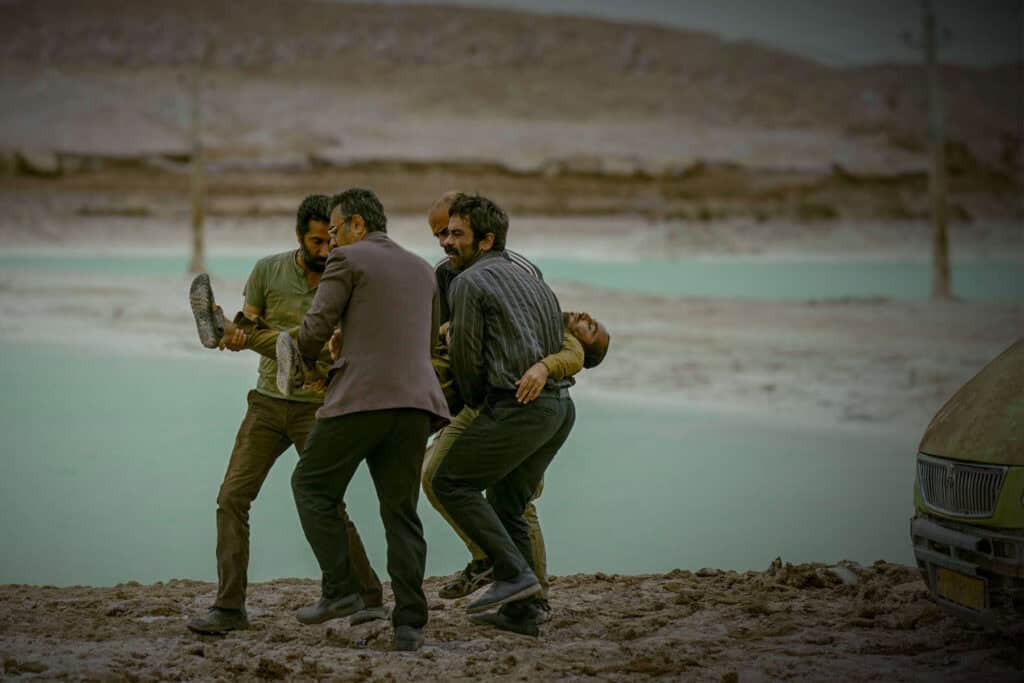
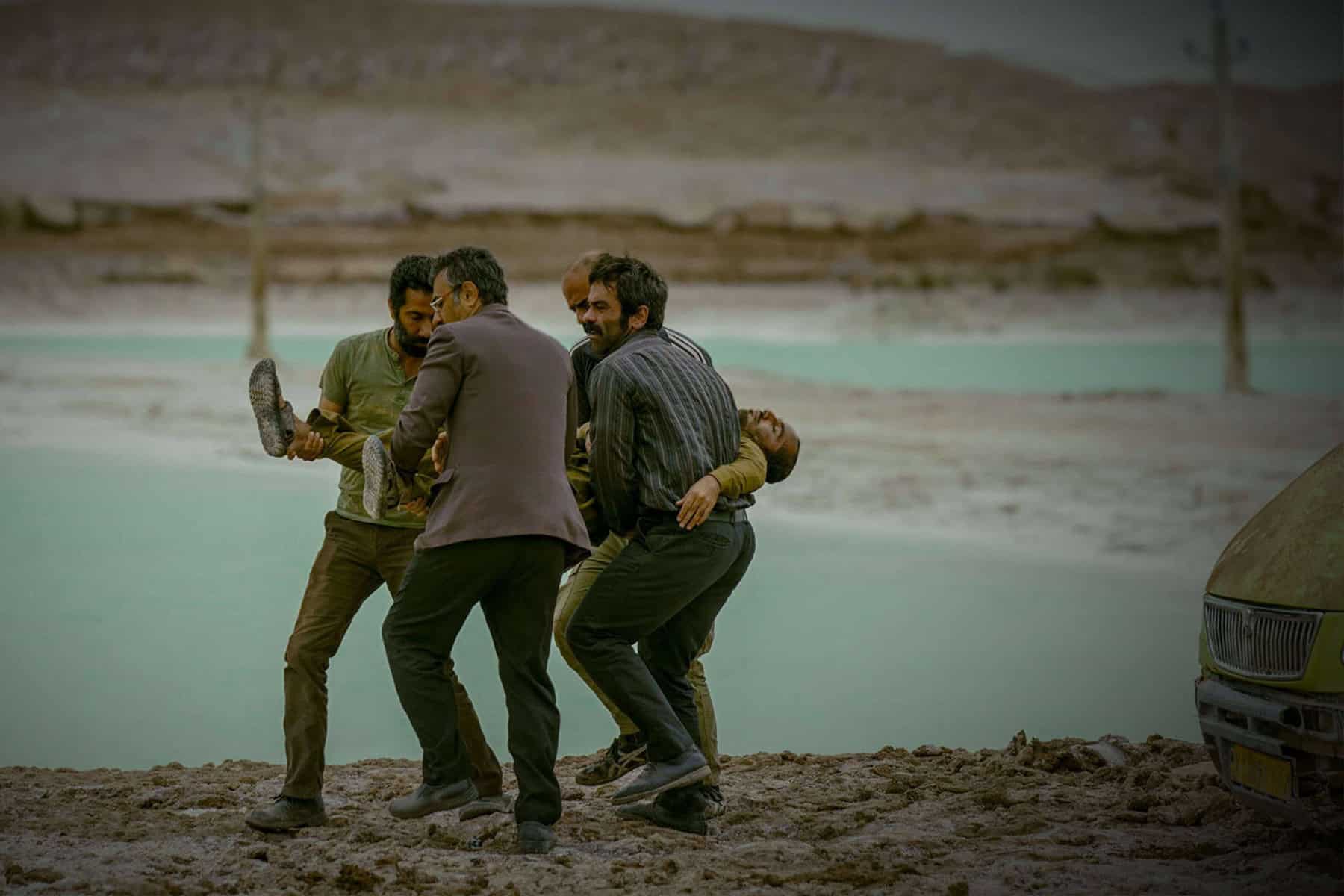
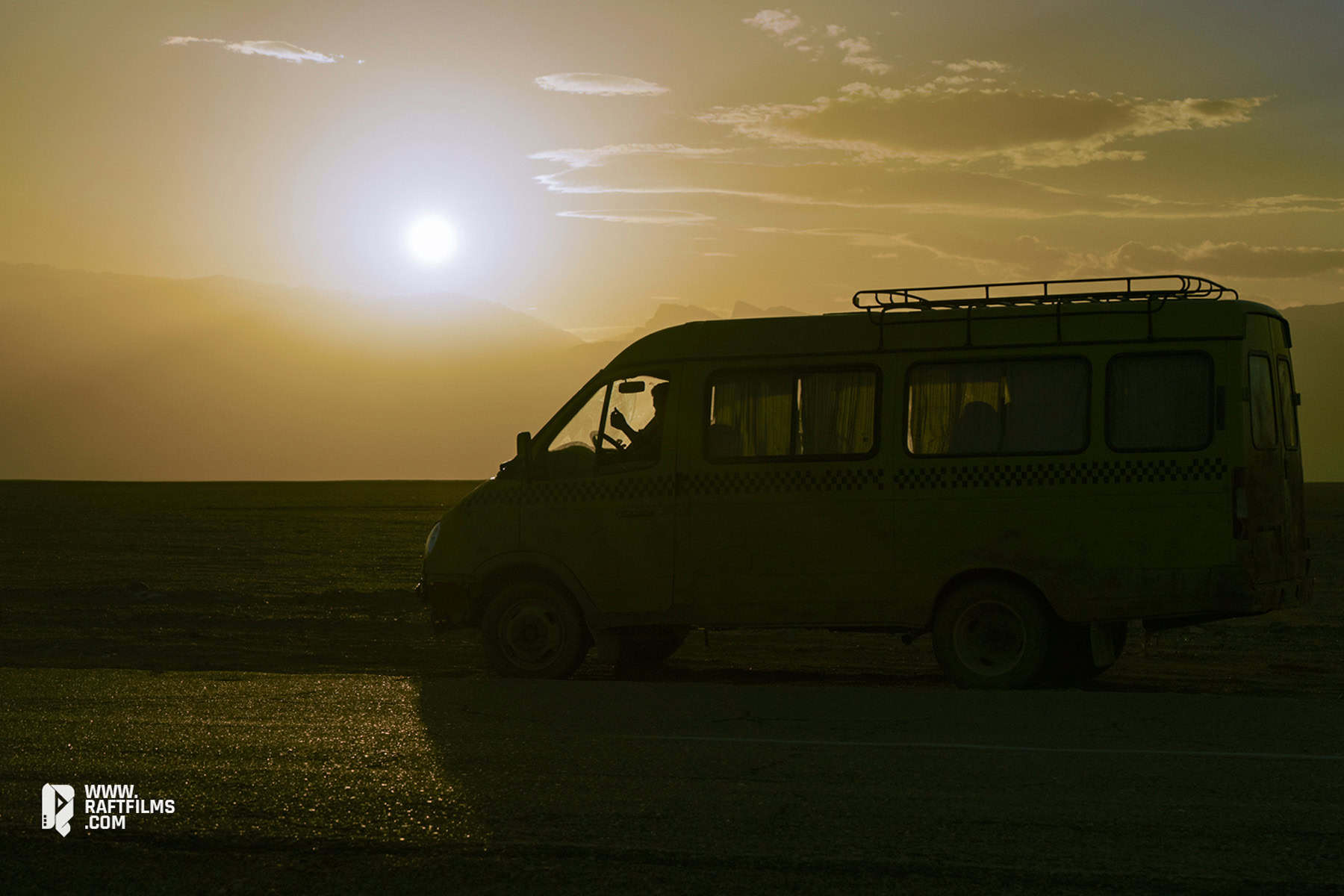
Ali Zarnegar’s Cause of Death: Unknown begins in the half-light of morning, with a group of passengers traveling from Shahdad to Kerman. The quiet unease of their journey is quickly disrupted when one of them is discovered dead, and with that, the film turns into an unsettling meditation on suspicion, secrecy, and human frailty. From its very first scenes, Zarnegar refuses to play into the expected tropes of a mystery thriller. Instead, he lingers on silences, half-glances, and the barren road stretching across the desert, letting tension simmer in small gestures rather than explosive revelations.
The power of the film lies in its stillness. Zarnegar knows how to draw meaning out of an empty frame, capturing the dust of the roadside or the nervous shuffle of a passenger’s hands to suggest what words cannot. This minimalism creates a claustrophobic atmosphere, even though most of the story unfolds in open landscapes. The discovery of hidden money on the dead man’s body adds another layer of ambiguity: is this about greed, survival, or something more personal? Each passenger becomes a suspect not just in a death but in their own moral standing, and the audience is left questioning how truth slips away in the face of fear.
The ensemble cast amplifies this effect with restrained, deeply human performances. Rather than caricatures of guilt or innocence, each character feels lived-in, as if plucked from the roadside and placed into the frame. Their unease grows as the journey progresses, and the absence of clear answers forces viewers to inhabit the same uncertainty as the travelers themselves. Even the pacing mirrors the dragging of time during such tense situations, which is slow, deliberate, and occasionally frustrating in the way reality often is. It’s cinema that resists the easy satisfaction of explanation, demanding instead that we sit with ambiguity.
Cause of Death: Unknown is less about the mystery of a corpse and more about the mysteries of the living. Zarnegar uses the discovery of death not as a puzzle to be solved, but as a mirror to human behavior when confronted with fear, temptation, and mistrust. The film suggests that what truly unsettles us is not the absence of answers about how someone