1 – A Road That Could Have Cried Out, but Chose to Whisper
In road cinema, the road is never just a path — it’s a pulse. From Easy Rider, which roared with the spirit of rebellion, to Thelma & Louise, which turned asphalt into an arena of liberation, the journey itself becomes a living character, shaping destinies and testing souls.
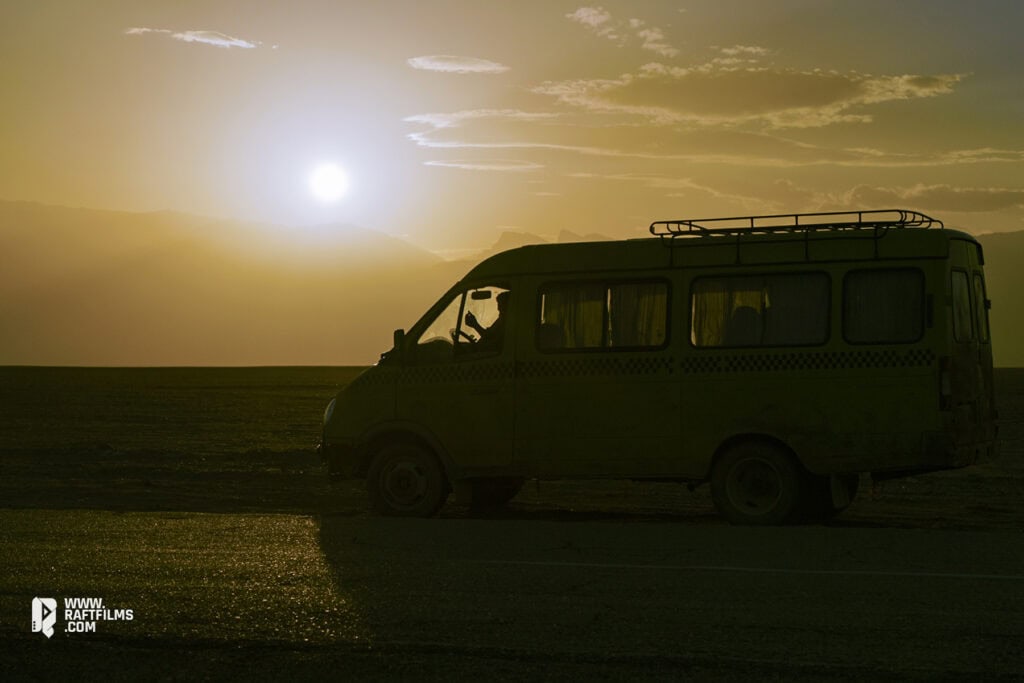
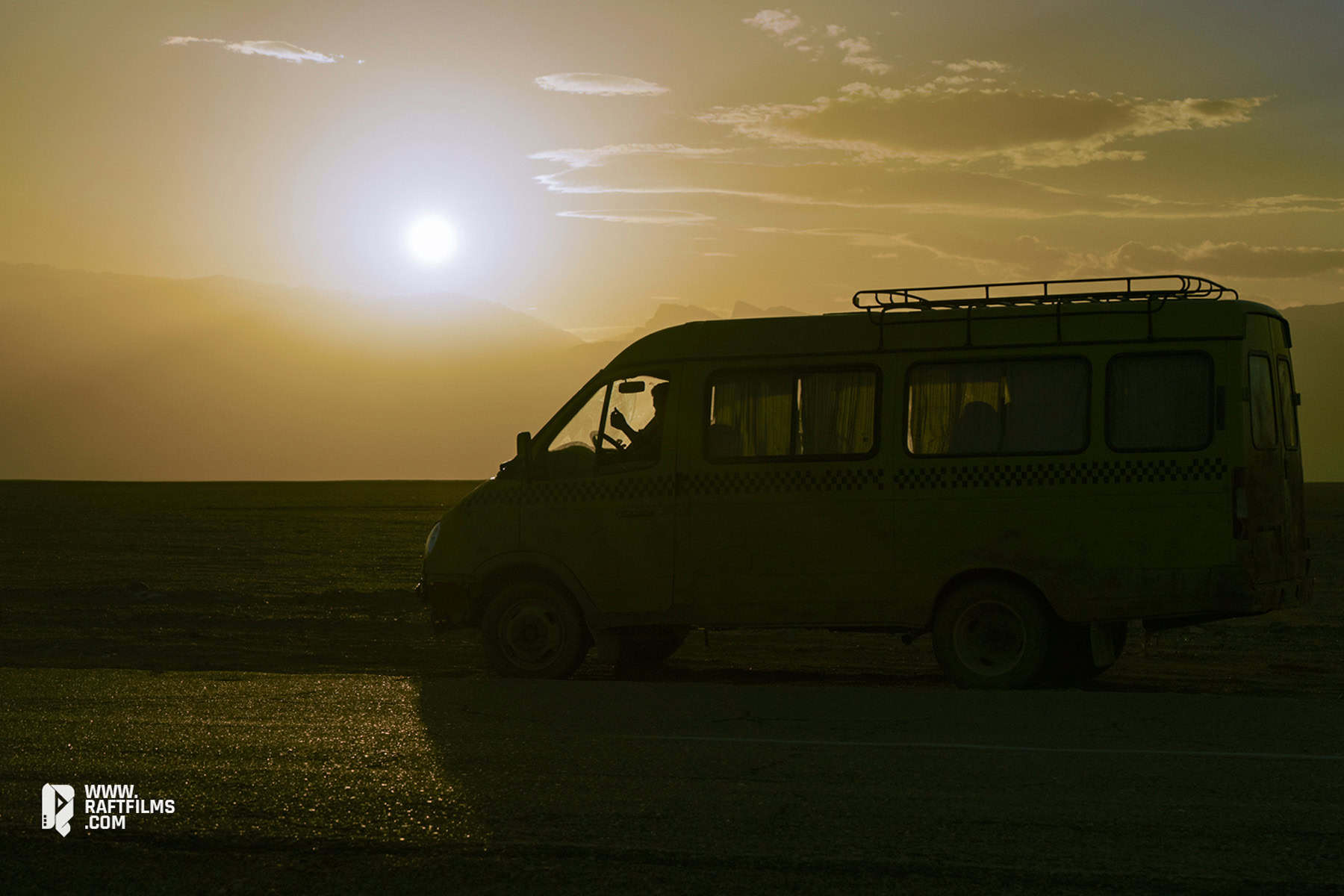
In Cause of Death: Unknown, the desert highway stretches like a scar across the darkness — vast, silent, and uncertain. Its endless night captures both the isolation and moral ambiguity that define the film. Yet one senses that this road, so full of metaphorical power, remains underused. It watches rather than intervenes.
Here, the landscape functions less as a force of transformation and more as a painter’s canvas — a still expanse against which human desperation takes shape. Perhaps Ali Zarnegar’s restraint is intentional, a choice to let his characters’ inner journeys overshadow the physical one. But that restraint also blunts the kinetic energy we expect from a road film.
Even so, this stillness becomes its own kind of motion. The van’s slow passage through darkness feels almost suspended in time — a purgatorial drift that invites reflection rather than revelation. The film may whisper where others shout, but in that quiet, it finds a haunting, contemplative rhythm.
2 – Ordinary People Caught in an Extraordinary Event
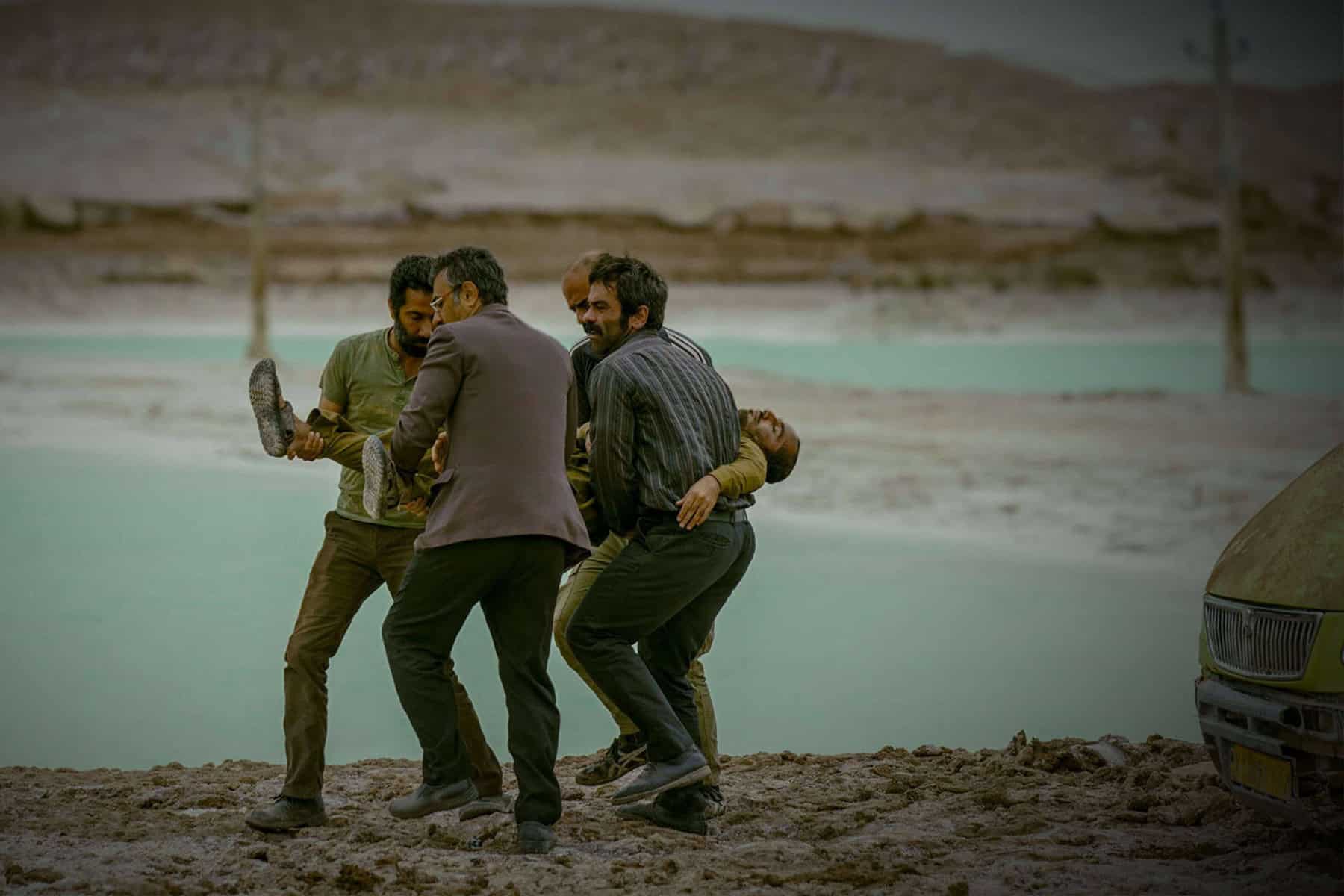
It all begins with something deceptively simple: a passenger’s sudden death and a bundle of cash discovered inside a van. Yet that single moment sets off a moral chain reaction, pulling a handful of ordinary people into a storm of uncertainty.
Zarnegar populates his van not with archetypes but with the texture of real life — a driver flirting with greed, a young couple tethered to an uncertain future, men wrestling with debts, loyalties, and survival. None of them are heroes, and none are outright villains. They inhabit the moral twilight that defines so much of contemporary Iranian life — the space between survival and conscience.
The film thrives on this ambiguity. Dialogue slices through the silence like a blade, charged with suspicion and fleeting solidarity. As tensions simmer, alliances shift, and compassion emerges where you least expect it. Rather than relying on action or spectacle, Cause of Death: Unknown finds its momentum in psychology — in the slow peeling back of its characters’ defenses. What grips the audience is not the question of who will survive, but who they become in the process. In that sense, Zarnegar’s film is less a thriller than an X-ray of the human condition, exposing the fractures beneath everyday decency.
3 – The Rhythm of Time Standing Still: A Deep Breath in a Moral Limbo
Zarnegar’s film moves with the patience of someone unafraid of silence. Its pace is deliberate — not sluggish, but contemplative. Cause of Death: Unknown resists the mechanics of the crime thriller and instead unearths the slow erosion of conscience. Every pause, every held gaze, becomes a quiet act of revelation. Inside the van, time stretches and folds. The world outside fades into the night, and what remains is a suspended moral space — part confession booth, part battlefield. For viewers accustomed to the quick pulse of contemporary cinema, this stillness may feel demanding. But it’s precisely this unhurried rhythm that transforms the film into a meditative experience.
The pauses here are not gaps in storytelling; they are invitations — to listen, to judge, to doubt. As we sit alongside the characters, caught in their ethical paralysis, we are compelled to face our own. In this way, Zarnegar turns the screen into a mirror: one that reflects not only a fractured society, but the fragile moral compass within each of us.
4 – The Iranian Western: A Battle of Conscience in a Lawless Desert
It may sound unexpected, but Cause of Death: Unknown echoes the moral landscape of a Western. Its barren deserts, endless highways, and the eerie stillness of open space recall the existential loneliness of High Noon or The Searchers. Like those films, Zarnegar’s world is one where order has evaporated and morality becomes the only frontier left to defend. There are no gunslingers here, no duels at dawn — only a van full of ordinary people thrust into extraordinary ethical trials. The discovery of money functions much like the discovery of gold in the Old West: it stirs greed, suspicion, and the primal urge for survival. Yet the true violence in Zarnegar’s desert is inward. The duels happen in silence — glances, hesitations, choices made in the dark.
In this sense, Cause of Death: Unknown becomes a “moral Western,” one where the terrain of conflict lies within the human conscience. Each passenger becomes both lawkeeper and outlaw, caught between impulse and integrity. By situating this psychological struggle in a landscape stripped of institutions and authority, Zarnegar transforms a contained drama into an allegory of modern Iran — a place where the boundaries between justice and survival are perilously thin.
5 – Green: The Color of History and an Unhealed Pain
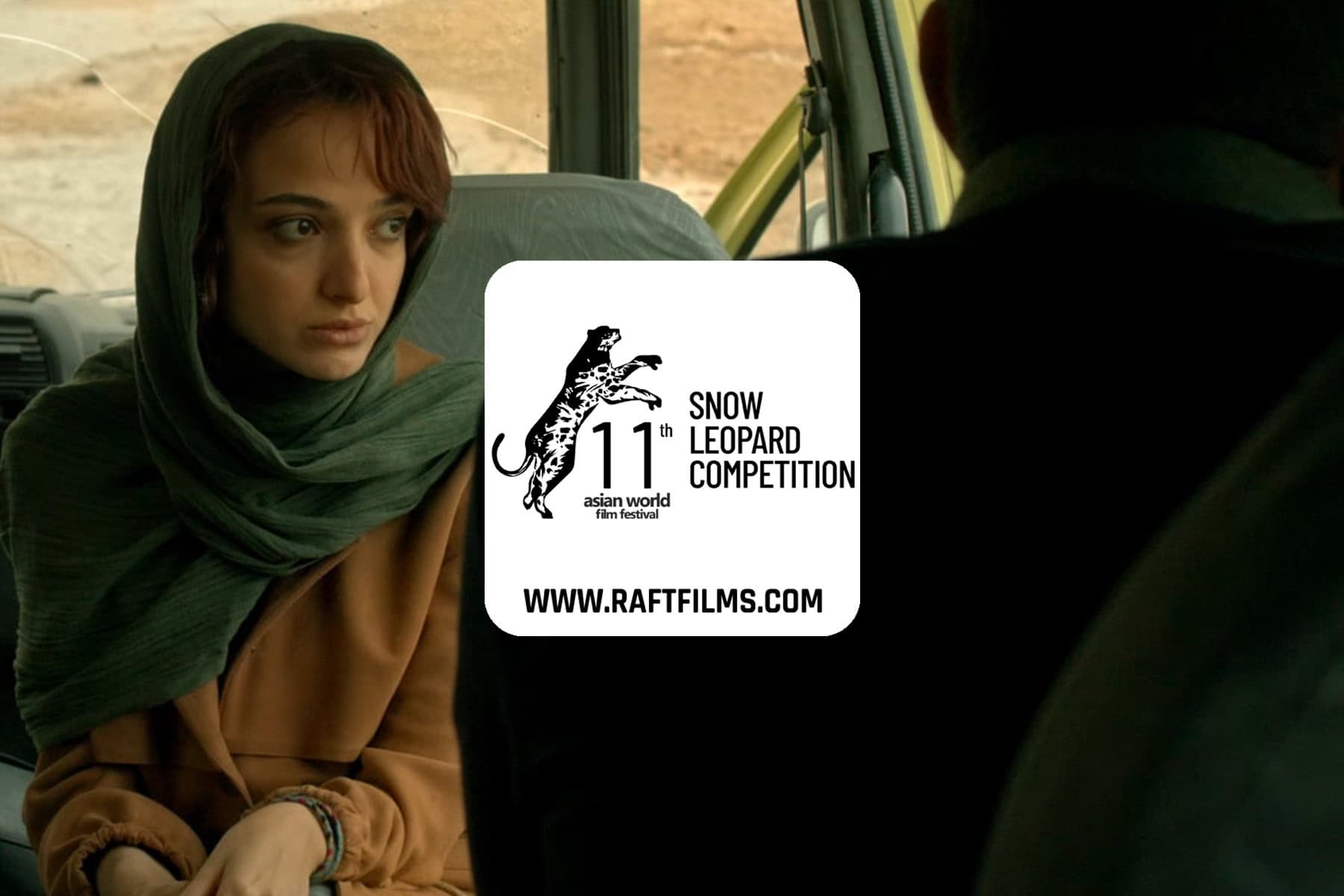
Among Zarnegar’s most striking artistic decisions is his use of green — a color that saturates the film’s palette, from the lighting and set design to the very fabric of the characters’ clothing. On the surface, it lends a moody coherence to the film’s visual world. Beneath that, it serves as a potent symbol — one impossible to separate from Iran’s own political history. For Iranian audiences, the color green inevitably recalls the Green Movement of 2009 — a moment of collective awakening and suppressed hope. By invoking that hue, Zarnegar doesn’t reference history directly; he lets it hum beneath the frame. The film’s green light is the afterglow of a wound that never healed, an echo of moral reckoning still trapped in the nation’s consciousness.
In this world, green carries contradictions: it signifies renewal, but also fatigue; resistance, but also resignation. It seeps into the moral air the characters breathe, blurring the boundaries between guilt and survival, truth and self-deception.
Formally, this chromatic language is a triumph of visual storytelling. It demonstrates how a single color can hold an entire era’s emotional residue — turning aesthetics into subtext, and subtext into memory. Through green, Cause of Death: Unknown transforms from a psychological drama into a quiet act of remembrance.
6 – The Everyday Antiheroes: Lives Defined by Reaction
In Zarnegar’s world, few people are pure of heart or purely corrupt. Most drift somewhere in between, suspended between the ghosts of their past and the dull gravity of the present. The van becomes a microcosm of a society defined less by choice than by reaction — where survival often replaces conviction, and resignation passes for peace. The film’s characters aren’t classical heroes or villains; they are ordinary people caught in the undertow of circumstance. Their moral paralysis gives the narrative its quiet ache. Yet within this inertia, two figures emerge as exceptions: a man newly freed from prison, desperate to save another from execution, and a woman who still clings to the fragile idea of saving herself — and, perhaps, another’s dream.
Their resolve draws a subtle but powerful fault line through the film. On one side are those who resist despair, struggling to reclaim agency in a world designed to crush it. On the other, those who surrender to the monotony of survival, content with the illusion of safety. Zarnegar captures this tension with rare empathy — showing how, in the absence of grand heroes, the smallest gestures of defiance can feel revolutionary.
7 – Family: The Shared Burden of a Collective Soul
Beneath its crime-story shell, Cause of Death: Unknown pulses with a quieter, more universal ache — the longing, duty, and despair bound up in the idea of family. From the driver anxious to build one, to the couple tethered to an uncertain future, to the man haunted by the thought of losing his wife, every thread in Zarnegar’s narrative leads back to this primal structure of connection and dependence. Even the dead passenger, whose mysterious cargo of money sets the story in motion, carries with him a clear motive: someone, somewhere, is waiting for him.
Family, in Zarnegar’s vision, is not a source of comfort but of moral gravity. It is the force that gives meaning to his characters’ choices — and, at times, their undoing. In a society frayed by economic hardship and ethical ambiguity, family becomes both refuge and trap, a sacred obligation that demands impossible sacrifices. The film’s final image lingers like an unanswered prayer: a pregnant woman standing in the dark, waiting for the van. It’s a haunting metaphor for continuity — of love, of guilt, of survival. The cycle repeats, generation after generation, as if the true “cause of death unknown” were not a mystery to be solved, but a condition to be inherited: the quiet sickness of a society that keeps trying to live, love, and endure despite itself.
In Conclusion
With remarkable courage and formal precision, Ali Zarnegar reimagines the road movie as a vehicle for moral excavation. Eschewing spectacle for silence, he crafts a film that listens more than it speaks — a meditation on guilt, survival, and the invisible codes that govern ordinary lives.
Cause of Death: Unknown ultimately reflects the uneasy conscience of contemporary Iran, where every journey — physical or spiritual — unfolds across a landscape scarred by ambiguity. The road here is both metaphor and mirror: a path that tests integrity, tempts weakness, and reveals the unseen wounds that shape a society’s soul.
Zarnegar’s film reminds us that the real journeys are never outward, and that the true cause of death — and of life — lies somewhere along the winding road between ethics and existence.