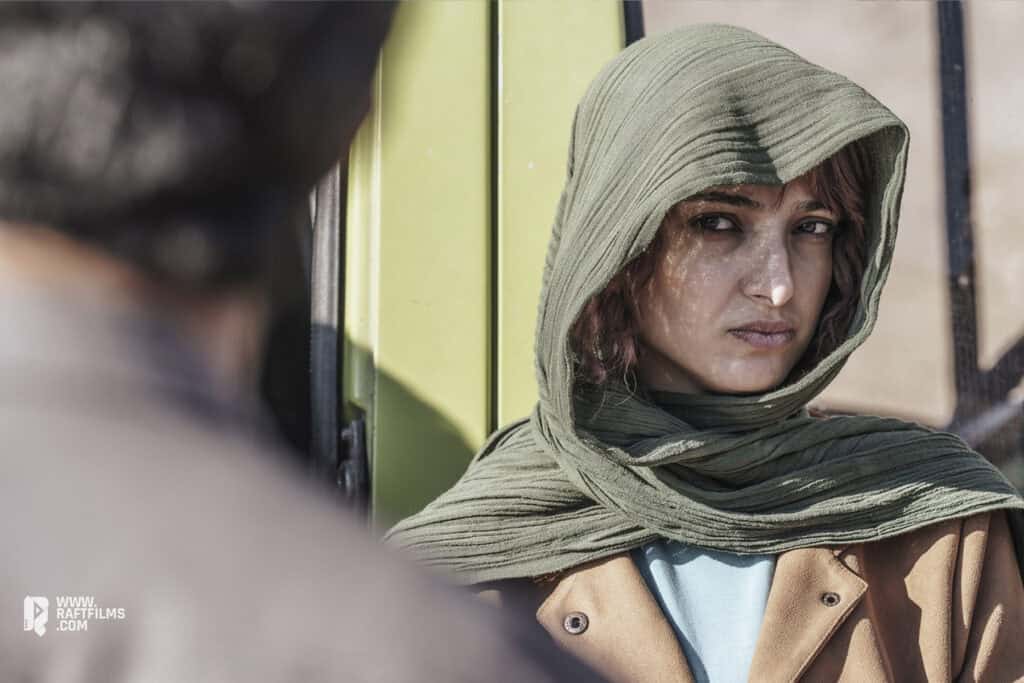
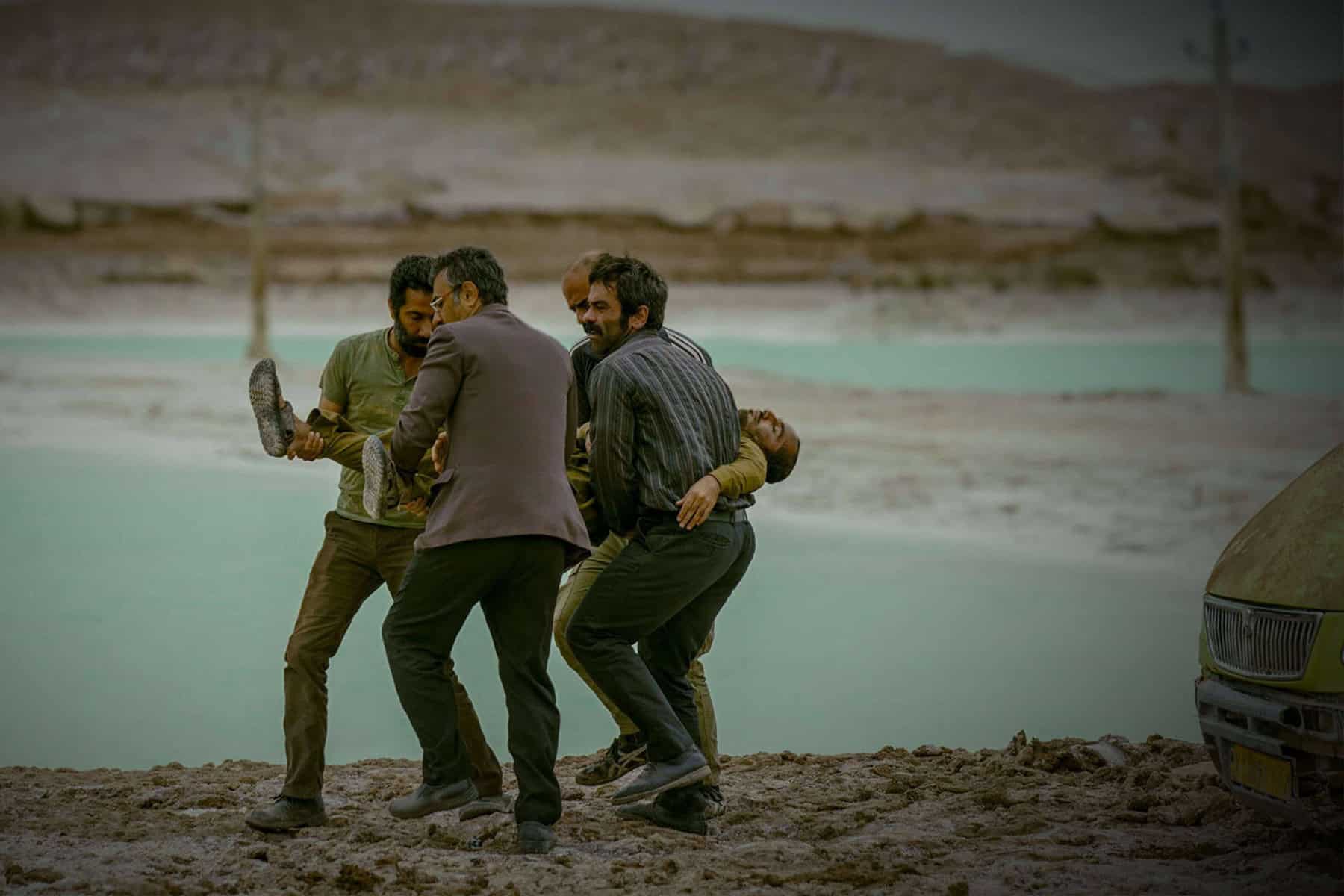
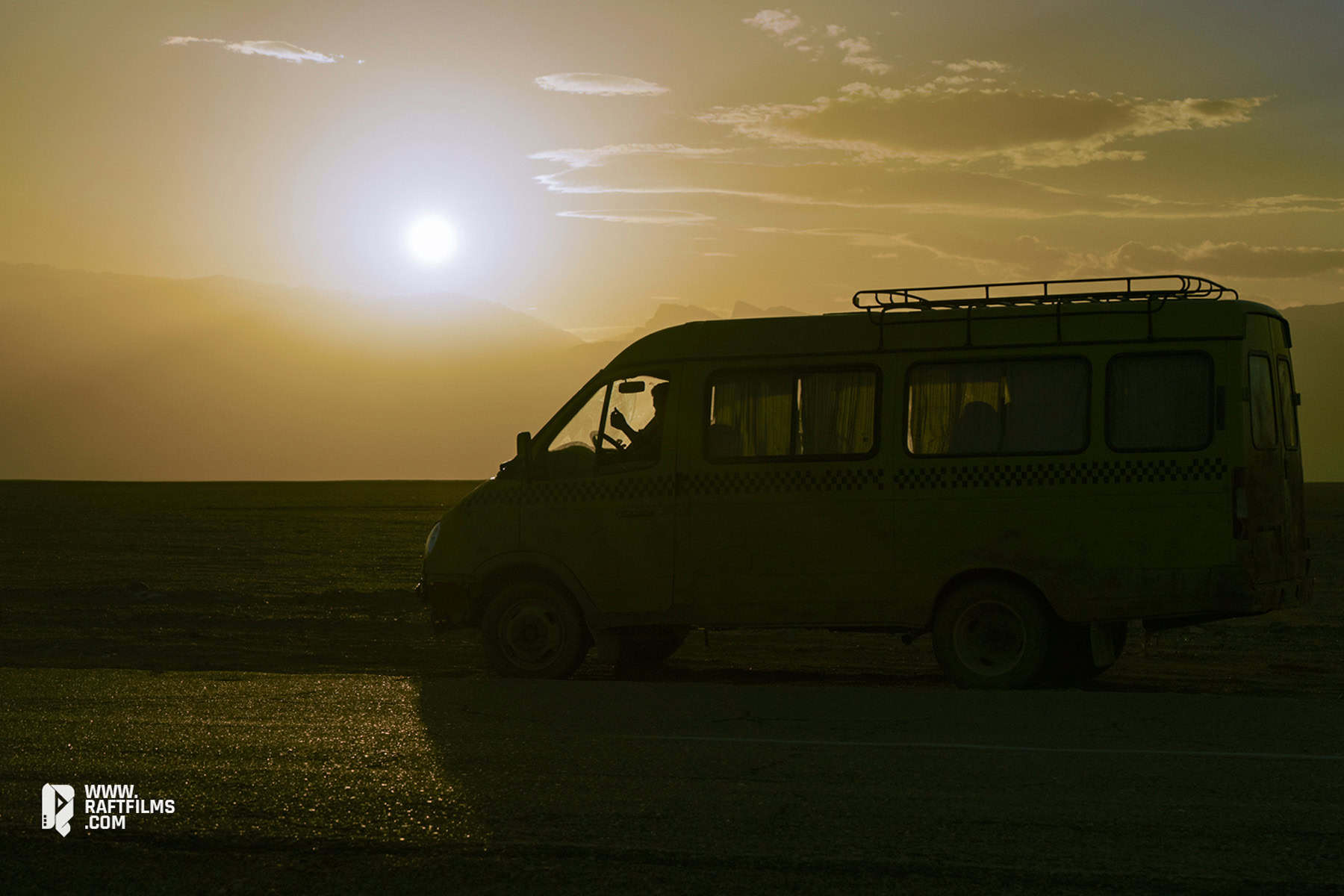
The release of Cause of Death: Unknown (directed by Ali Zarnegar) has recently begun on the Filmnet platform. Produced by Majid Barzegar and starring Banipal Shoomoon, Alireza Sanifar, Neda Jebraeili, Ali-Mohammad Radmanesh, Zakieh Behbahani, Reza Amouzad, and Soheil Bavi, the film follows seven passengers traveling along a remote desert road toward Kerman — until they discover that one of them has died.
Cause of Death: Unknown belongs to the tradition of Iranian social dramas — a genre that, though abundant in recent years, has steadily lost its vitality at the box office. More importantly, truly powerful and thought-provoking examples of the form have become increasingly rare. Beyond censorship constraints and the challenges of portraying contemporary Iranian society in all its complexity, one conceptual obstacle has defined much of this cinema: passivity. Many films that claim to engage with social issues end up promoting a sense of helplessness — as if we are all trapped in situations where nothing can be done but to watch ourselves dissolve. Rather than developing their ideas, such films simply pour misfortune after misfortune onto their characters, mistaking an accumulation of suffering for dramatic tension.
Another weakness of the genre has been its recurring tendency to condemn the very people it portrays. Instead of crafting empathetic, multidimensional characters, these films often look down on ordinary individuals, implicitly blaming them for the country’s woes. It’s a curious dual gesture — wanting to appear socially conscious while keeping the film ideologically “safe” enough to pass censorship. The result has been an industry crowded with “harmless matches” — films that spark momentarily but never burn.
In this context, the emergence of a work like Cause of Death: Unknown feels like a breath of fresh air. In his debut feature, following several acclaimed screenplays, Zarnegar draws on familiar motifs of the social drama — a sudden, unsettling death; the economic pressures crushing Iran’s lower and middle classes; the moral struggle between conscience and self-interest — yet from these well-worn premises he extracts a strikingly original moral vision.
Perhaps the film’s most defining quality is its measured intelligence. Zarnegar neither excuses corruption nor demonizes the underprivileged to flatter the audience’s conscience. Instead, he approaches his characters without moral absolutism. They are flawed, conflicted individuals — capable of deceit, fear, and betrayal — yet always deeply human. His refusal to judge them from above gives the film an ethical weight rare in contemporary Iranian cinema. Even when Cause of Death: Unknown arrives at a clear moral conclusion, it never negates alternative perspectives. Each character, however compromised, retains a belief — however fragile — in a personal code of ethics. This is what keeps the film from slipping into banality or cynicism.
Structurally, the film is also notable, though not without its shortcomings. After the death of one passenger, the group debates a series of implausible plans — a stretch that slightly disrupts the narrative rhythm. While it’s true that people in crisis often behave irrationally, the extended emphasis on obviously impractical ideas momentarily weakens the tension. Yet visually, Zarnegar achieves something rare: a low-budget aesthetic that feels deliberate rather than constrained. Eschewing the grimy clichés of Iranian social realism, he creates a visual language closer to that of a desert road movie — austere, sun-bleached, and morally charged.
Combined with sharp casting and a nuanced script, Cause of Death: Unknown stands as one of the most distinct and compelling social dramas to emerge from Iran’s recent cinema — an intimate moral allegory unfolding under the blinding light of the desert.