Cause of Death: Unknown is a film that finally reached audiences after three years of censorship and delay. Yet, if you plan to see it, don’t expect the easy ticketing experience of mainstream comedies. The film has been given a painfully limited release—screened in only a few cities, sometimes with just a single daily showing, or not at all. Even in Tehran, where the number of theaters is higher, screening times are scarce and irregular. This alone illustrates the dismal and unhealthy state of Iranian cinema today: an industry dominated by shallow, profit-driven comedies that occupy 95% of the screens, leaving little room for serious, artistically valuable works.
After three years of arbitrary suppression that cost a young filmmaker valuable time, debut director Ali Zarnegar has finally managed to bring his first feature to the screen—albeit in a restricted capacity. Cause of Death: Unknown may not feature celebrity actors with box-office pull, yet every performance is strikingly strong and nuanced. Zarnegar’s debut reveals a remarkably mature and confident filmmaker, delivering a powerful and refined piece of cinema.
This is a film designed to challenge the viewer’s sense of moral certainty. It forces audiences to confront ethical crossroads and reconsider their own choices—both within the story and beyond it.
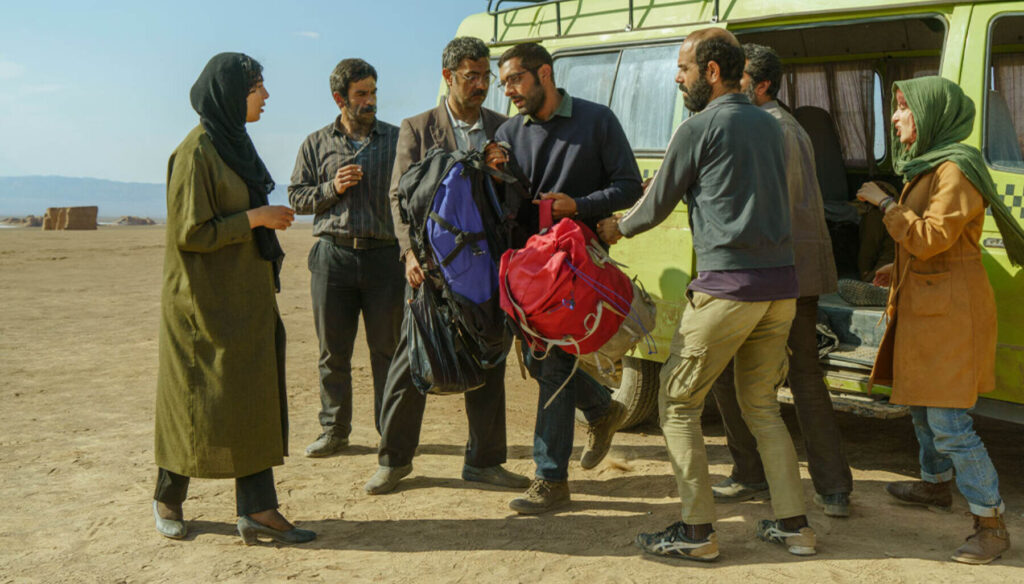
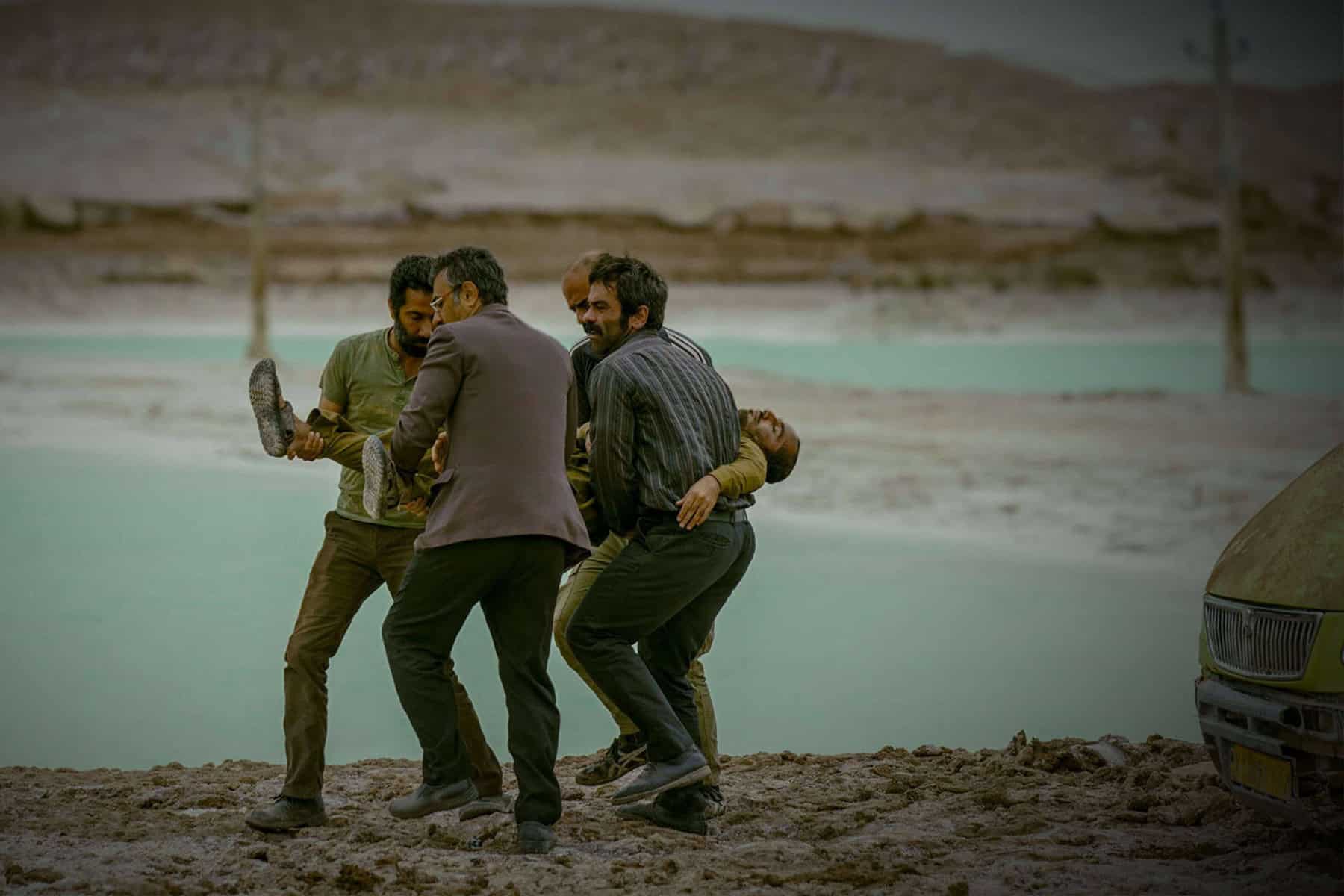
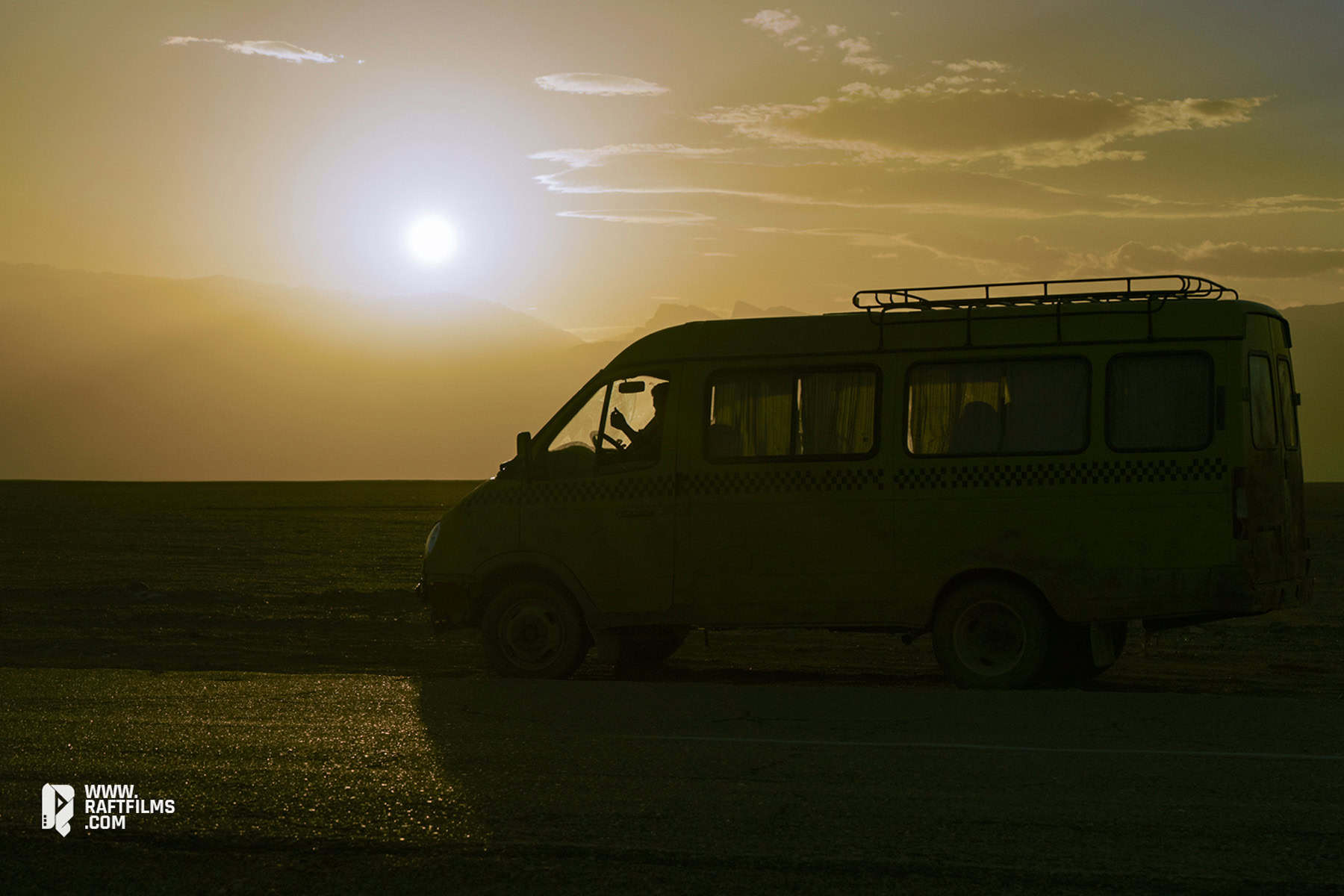
Cause of Death: Unknown unfolds as a road movie, its entire story taking place inside a passenger van somewhere near the city of Kerman. The plot unfolds over the course of a single, seemingly ordinary night: seven travelers board a shared van for an intercity trip, and everything appears routine—until, suddenly, one of the passengers is found dead. As the title suggests, the cause of death remains unknown.
At first glance, one might expect a familiar Hollywood-style mystery that gradually reveals who is responsible for the death. Yet Zarnegar’s film takes a very different path. Instead of following the conventions of a whodunit, it turns inward—into a moral drama, delicately constructed and full of emotional tension. The film isn’t interested in uncovering a killer; it’s interested in exposing conscience.
The narrative explores the behavior and reactions of the remaining passengers—six travelers and one driver—as they navigate the shock and moral uncertainty of the incident. The van becomes a microcosm of society: a confined space populated by people from different walks of life, each carrying their own burdens, anxieties, and needs. One of the film’s greatest strengths lies in how authentically these seven characters are written. They feel real, human, and deeply relatable. Zarnegar’s careful construction ensures that viewers genuinely care about what happens to each of them, following their moral and emotional struggles with growing intensity.
The film crafts a group of characters who, above all else, remain profoundly human. They find themselves confronted with a corpse in their van—an event that could have serious consequences for any of them depending on how they respond. Among the passengers is a man on temporary leave from prison, another planning to flee the country and desperate to avoid police involvement. Each of the seven faces moments of temptation and moral uncertainty, and the film cleverly places the viewer in the same ethical predicament—inviting us to judge, hesitate, and reconsider alongside them.
Despite their fears and conflicts, these passengers display compassion and solidarity. They argue, doubt, and falter, yet they also protect one another when it truly matters. Director Ali Zarnegar never looks down on his characters; even when they succumb to weakness, he treats them with empathy and dignity. What emerges is a portrait of people guided not by cynicism but by an underlying sense of humanity and self-respect.
From the very beginning, Cause of Death: Unknown succeeds in placing the viewer inside the van, as though we, too, are one of the passengers. We experience every dilemma, feel every pulse of anxiety, and weigh each decision as if our own fate were at stake. The seven characters are not guilty—they are simply unlucky, trapped by circumstance when a fellow traveler dies among them. As tension rises, we grow genuinely concerned for them, fearing that innocent people may be punished for events beyond their control. One of the film’s quiet triumphs is that not a single character feels superfluous; every one of them is essential to the moral and emotional architecture of the story.
None of the characters in Cause of Death: Unknown could be removed without diminishing the film’s integrity. Each one has been written and developed with such precision that they all serve a vital role in driving the story forward. Zarnegar’s use of location is equally deliberate and meaningful. In many Iranian productions, the setting often feels decorative—chosen for its visual appeal rather than its narrative relevance. Here, however, the desert landscape is not a backdrop; it is an essential part of the film’s moral and emotional texture.
The barren, sun-scorched terrain of Kerman mirrors the weariness etched into the faces of the passengers—men and women with hardened expressions and fragile bodies, traveling in a worn-out van that barely holds together. The environment amplifies their exhaustion and isolation, blurring the line between physical desolation and moral uncertainty. Moreover, the choice of this region, where police patrols frequently pass to combat smuggling, adds a constant undercurrent of tension that directly intersects with the characters’ fears and decisions.
Everything in Cause of Death: Unknown feels organically connected: the performances, the screenplay, the direction, and the spatial design all work in harmony. Zarnegar demonstrates an uncommon ability to build character through image and mise-en-scène, crafting meaning from the smallest visual details. His debut film is a masterclass in restrained storytelling and moral depth—one that deserves to be seen, discussed, and remembered.
Earlier, we mentioned that the characters in Cause of Death: Unknown share a quiet sense of empathy and moral awareness toward one another. This becomes strikingly evident in key moments—such as when the police suddenly arrive and the passengers instinctively protect the young man among them, or later, in the final scenes, when the main character (played by Banipal Shoomoon) returns to share the remaining money after paying the blood money for his executed friend. Acts like these underline the characters’ dignity, preventing the film from descending into bleakness or moral decay.
The film is full of such subtle gestures. The van driver, when accused of stealing the money, bursts out in anger not because of greed but out of wounded honor. Another passenger, wearing painfully tight shoes, never asks for money in a shameless or manipulative way. And despite their growing desperation, none of them explicitly suggests taking the dead man’s cash. Every decision they make is weighed down by hesitation, conscience, and moral doubt—the very qualities that render them deeply human and believable.
One of the film’s most powerful moments arrives during the funeral sequence—a haunting, understated scene that may well be the emotional peak of the entire work. When the passengers decide to bury the dead traveler so that his body won’t remain unclaimed in the desert, it marks a turning point. In this act, they confront the full gravity of what has happened. Their character arcs quietly resolve as they lay the man to rest, tears flowing in silence.
In a particularly moving shot, one passenger (played by Alireza Sanifar), who throughout the film has spoken of his sick wife and his desperate need for money, pauses above the grave, staring down as if seeing her face reflected in the freshly dug earth. His stillness and the long, wordless shot that follows complete his character more eloquently than any dialogue could.
The film closes on a note of profound emotional resonance. After the passengers encounter the dead man’s pregnant wife and young child, the story leaves viewers with an ache that lingers long after the screen fades to black—a reminder of a family waiting in vain for a loved one now buried somewhere in the heart of the desert.
In the end, Cause of Death: Unknown stands out as one of the rare films truly worth the price of a movie ticket and the time spent in a theater. It is a film that deserves to be seen and discussed. Works like this are essential for today’s audiences—films that make us think, that challenge our moral comfort, and that compel us to confront ourselves more than once.
In contrast, the endless stream of shallow comedies filled with forced laughter and empty humor offers nothing of value to viewers or to society. Cause of Death: Unknown reminds us what cinema can and should be: not an escape from thought, but a mirror that quietly forces us to look inward.